Beginner’s Guide to Getting Started With Your Trezor Hardware Wallet
Introduction
Cryptocurrency ownership comes with the responsibility of protecting your digital assets. While online wallets, exchanges, and software wallets offer convenience, they are also prone to hacks, phishing attacks, and malware. A hardware wallet like Trezor provides a highly secure solution by keeping your private keys offline, away from internet threats.
Trezor is one of the pioneering hardware wallets, offering robust security, ease of use, and support for hundreds of cryptocurrencies. This guide is designed for beginners and walks through the entire process—from unboxing your device to performing your first transaction—so that you can start using your Trezor wallet safely and confidently.
1. Why a Trezor Wallet is Essential for Security
A Trezor device is a small, secure gadget that stores your private keys in an isolated environment. Because private keys never leave the device, it minimizes the risk of theft.
1.1. Offline Key Storage
Private keys are stored in the Trezor device’s secure hardware chip. Even when connected to a computer, keys are never exposed to the internet.
1.2. Full Ownership of Assets
Using a hardware wallet ensures you are the only person in control of your crypto. No exchange or third party has access to your funds.
1.3. Compatibility
Trezor supports a wide variety of coins and tokens, making it versatile for users with diverse portfolios.
1.4. Integration With User-Friendly Interfaces
Trezor works seamlessly with the Trezor Suite app, a desktop and mobile application that lets you manage accounts, track balances, and approve transactions safely.
2. Unboxing Your Trezor Device
When you receive your Trezor, it should come in a sealed package with:
The Trezor device (Model One or Model T)
A USB cable
Recovery seed cards for writing down your backup phrase
Instruction manual
Optional accessories depending on the model
Always verify the package is sealed and the device is new. Trezor devices never come with pre-written recovery phrases. If your device does, it is likely compromised and should not be used.
3. Setting Up Your Trezor Wallet
3.1. Powering On the Device
Connect the Trezor to your computer using the included USB cable. Trezor devices will light up, and the screen will display prompts.
You will be guided to either set up a new wallet or restore an existing one. Choose set up a new device if this is your first Trezor.
3.2. Installing Trezor Suite
Trezor Suite is the official app that allows you to interact with your device. Download it from trusted sources to avoid phishing attacks. Open the app and follow the prompts to connect your Trezor device.
You will be prompted to check the device’s authenticity to confirm it has not been tampered with.
4. Creating Your Recovery Seed
The recovery seed, also called the backup phrase, is the master key to your crypto wallet. Trezor generates this phrase during setup.
Step 1: Your device will display a series of words (usually 12 or 24).
Step 2: Write them down carefully on the provided seed cards.
Step 3: Verify the words when prompted to ensure you recorded them correctly.
Safety tips for your recovery seed:
Do not store the phrase digitally. Avoid photos, emails, or cloud storage.
Keep it in a safe, secure, and private location.
Do not share it with anyone; possession of the seed gives full access to your funds.
5. Setting a PIN Code
Next, Trezor will ask you to create a PIN code. This PIN protects your device in case it is lost or stolen.
Select a PIN that is memorable but difficult to guess.
The PIN must be entered every time you access the wallet.
After several incorrect attempts, Trezor wipes itself, keeping your funds secure.
6. Using Trezor Suite
Once your wallet is set up, Trezor Suite provides a user-friendly way to manage your assets:
Install cryptocurrency apps: Trezor devices support multiple blockchains, but apps for certain coins may need to be installed.
Manage accounts: You can add multiple accounts for the same cryptocurrency.
View balances and transactions: Track your portfolio in real-time.
Approve transactions: Trezor devices require physical confirmation on the device screen before signing transactions.
7. Receiving Cryptocurrency
To receive crypto:
Open Trezor Suite and select the account you want to receive funds into.
Click the “Receive” option.
Verify that the receiving address shown in the app matches the address on your Trezor device.
Only confirm once both addresses match. Copy this address to the sender’s wallet or exchange to transfer funds. You do not need to keep the device connected while receiving crypto—the blockchain records the incoming funds independently.
8. Sending Cryptocurrency
Sending funds from your Trezor wallet is just as secure:
Open the Trezor Suite and select the account to send from.
Enter the recipient’s address and the amount.
Review the transaction fee and details.
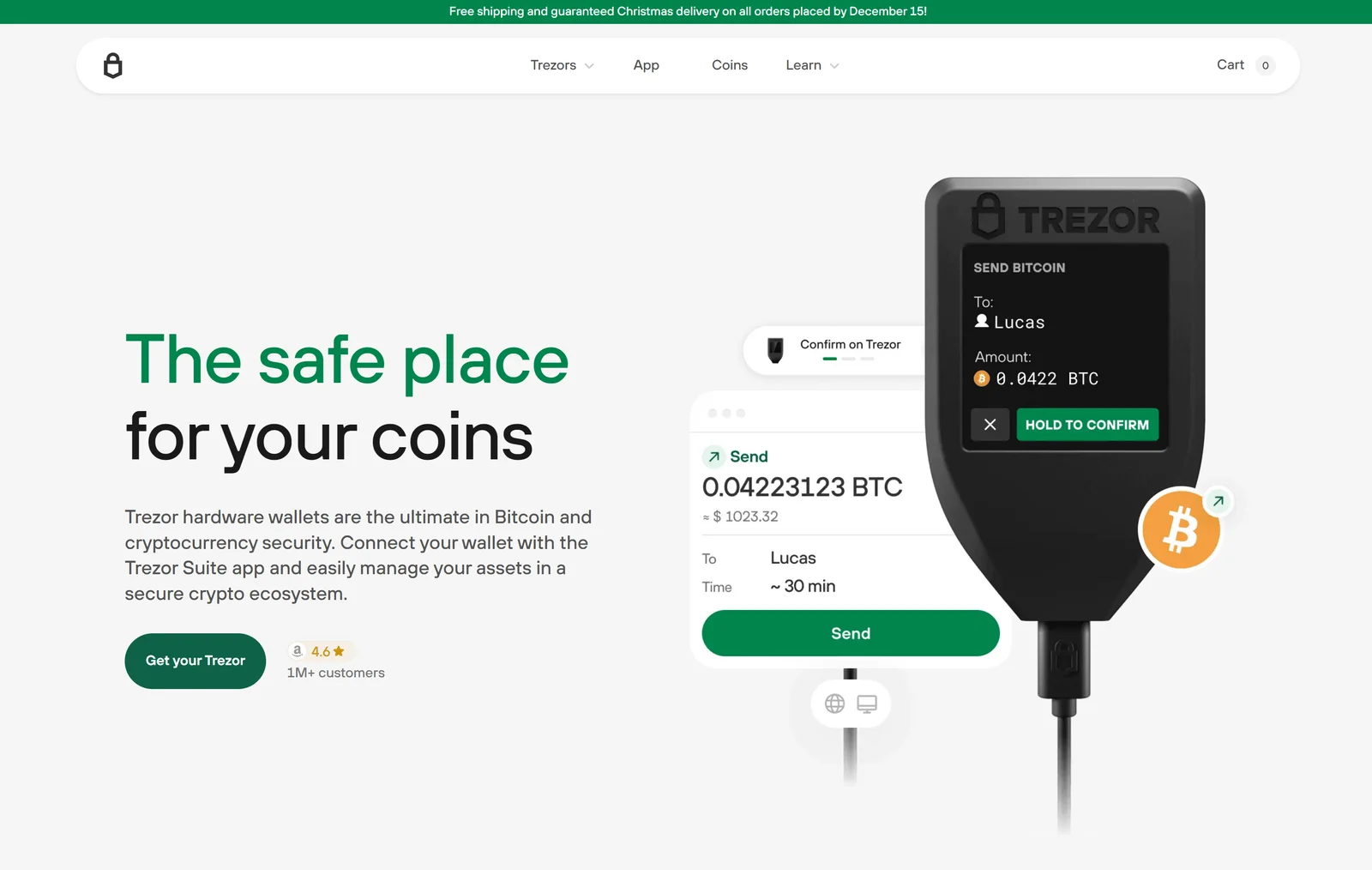
Approve the transaction on your Trezor device.
The device will display transaction details for verification. Ensure all information is correct before confirming.
9. Advanced Features
Trezor devices offer more than basic send-and-receive functionality:
9.1. Staking and DeFi
Some coins allow staking through Trezor-compatible platforms. You can stake securely while your private keys remain on the device.
9.2. Cryptocurrency Swaps
Trezor supports swaps between certain cryptocurrencies through third-party integrations. Always check fees before confirming.
9.3. Integration With External Wallets
Trezor can connect with popular external wallets, such as Ethereum-based DeFi wallets. The device signs transactions, keeping private keys safe.
10. Firmware and App Updates
Keeping your device and Trezor Suite up-to-date ensures maximum security:
Firmware updates: Regular updates patch vulnerabilities and improve device functionality.
Software updates: Trezor Suite updates enhance user experience and compatibility.
Always update through official sources and follow on-screen instructions.
11. Long-Term Security Best Practices
Even with a hardware wallet, user behavior is crucial:
Protect your recovery seed: It is your only backup.
Avoid phishing scams: No one will ask for your recovery seed.
Use trusted devices: Only connect Trezor to secure computers or phones.
Regular updates: Keep the device firmware and app updated.
12. Restoring Your Wallet
If your Trezor device is lost, stolen, or damaged, your crypto remains safe. You can restore it using your recovery seed:
Get a new Trezor device.
Choose the option to restore using your recovery seed.
Enter the 12 or 24 words exactly as they were written.
Your accounts and balances will reappear once synchronized with Trezor Suite.
Never restore your wallet on an untrusted device or one that came with a pre-written seed phrase.
Conclusion
A Trezor hardware wallet provides industry-leading security for cryptocurrency holders. By keeping private keys offline, requiring physical confirmation of transactions, and using a secure companion app, Trezor ensures that your digital assets remain protected.
While setting up a Trezor may feel detailed at first, each step—writing down the recovery seed, creating a PIN, verifying addresses—adds a layer of protection against loss or theft. With careful handling and attention to security best practices, your Trezor device becomes a powerful tool for safely managing cryptocurrency for years to come.